
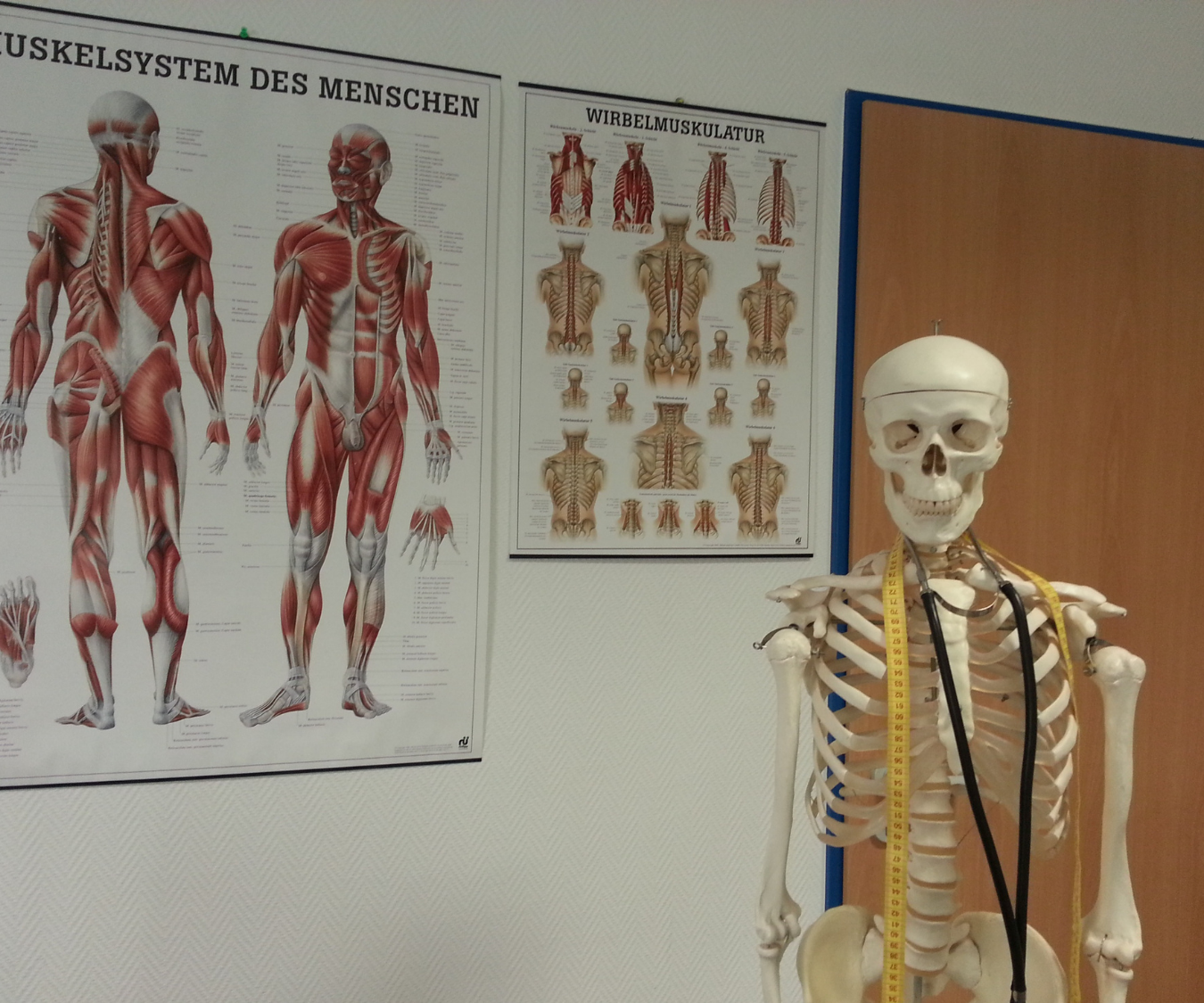
The human body relies on muscles to create movement, maintain posture, and generate force. Among the different types of muscle tissue, skeletal muscle plays the primary role in voluntary movement. It allows individuals to walk, run, lift objects, maintain balance, and perform daily activities.
The organization of skeletal muscle fibers directly influences how muscles produce force. The direction, arrangement, and structure of muscle fibers determine the amount of strength a muscle can create, the distance it can move a joint, and the type of movement it can produce.
Understanding muscle fiber arrangement is important for exercise professionals because it helps explain why different muscles perform different functions and why certain exercises target muscles in specific ways.
What Is Skeletal Muscle?
Skeletal muscle is a type of muscle tissue attached to bones by tendons. When skeletal muscle contracts, it pulls on bones and creates movement at joints.
Unlike smooth muscle and cardiac muscle, skeletal muscle is under voluntary control. This means individuals can consciously activate these muscles to perform movements.
Skeletal muscle has several important functions:
- Producing body movement
- Maintaining posture
- Stabilizing joints
- Generating heat
- Supporting physical performance
Each skeletal muscle is made up of thousands of muscle fibers organized into bundles. The arrangement of these fibers affects how efficiently the muscle can produce force.
Muscle Fiber Direction and Movement
The direction of muscle fibers determines how a muscle pulls on a bone.
Muscles generally produce force by shortening along the direction of their fibers. Because of this, fiber arrangement influences the type of movement a muscle can create.
For example:
- Fibers arranged in a straight line typically allow greater range of motion.
- Fibers arranged at an angle often allow greater force production.
- Multiple fiber arrangements create different movement abilities.
The structure of a muscle provides clues about its function.
Parallel Muscle Fiber Arrangement
In a parallel arrangement, muscle fibers run along the same direction as the length of the muscle.
These muscles are designed for greater movement distance and speed.
Because fibers shorten along their entire length, parallel muscles can create large ranges of motion.
Examples include:
- Sartorius muscle
- Rectus abdominis
Parallel muscles are often effective for movements requiring flexibility and longer motion.
However, they may produce less force compared with muscles that have more densely packed fibers.
Fusiform Muscle Arrangement
A fusiform muscle is a type of parallel arrangement where the muscle has a wider middle section and narrower ends.
The fibers run parallel to the muscle’s long axis.
This design allows the muscle to shorten significantly during contraction.
An example of a fusiform muscle is the biceps brachii.
During a biceps curl, the fibers shorten and pull on the forearm to create elbow flexion.
Pennate Muscle Fiber Arrangement
Pennate muscles have fibers that attach at an angle to a central tendon.
This arrangement allows more fibers to fit into a smaller space.
Because more fibers can contract at the same time, pennate muscles can produce greater force.
The tradeoff is that they usually have a smaller range of motion.
There are three main types of pennate arrangements:
- Unipennate
- Bipennate
- Multipennate
Unipennate Muscles
In unipennate muscles, fibers attach to only one side of a tendon.
This design allows a large number of fibers to contribute to force production.
An example is the extensor digitorum muscle in the forearm.
Bipennate Muscles
Bipennate muscles have fibers attached to both sides of a central tendon.
This arrangement increases the number of muscle fibers that can fit into the muscle.
The increased fiber density allows greater force production.
The rectus femoris muscle of the quadriceps is an example of a bipennate muscle.
Multipennate Muscles
Multipennate muscles contain multiple sections of fibers arranged around several tendons.
This structure allows very high force production.
An example is the deltoid muscle of the shoulder.
The deltoid helps create shoulder movement in multiple directions because of its complex fiber arrangement.
Circular Muscle Arrangement
Circular muscles have fibers arranged in a circular pattern around an opening or passage.
When these muscles contract, they decrease the size of the opening.
These muscles are also called sphincter muscles.
Examples include:
- Orbicularis oculi around the eye
- Orbicularis oris around the mouth
Their primary function is controlling movement through openings.
How Fiber Arrangement Affects Strength
The arrangement of skeletal muscle fibers directly affects force production.
Muscles with more fibers packed into a specific area generally produce more force.
Pennate muscles often generate higher levels of force because their angled fibers allow more contractile tissue to attach to tendons.
However, increased force often comes with reduced shortening distance.
This creates a balance between strength and range of motion.
How Fiber Arrangement Affects Range of Motion
Muscles with fibers arranged parallel to their length can usually shorten more.
This creates greater movement distance.
For example, muscles involved in large movements often require greater range of motion.
Pennate muscles, while stronger, typically create less movement because their fibers do not shorten the entire length of the muscle.
The body uses different muscle designs to meet different movement demands.
Skeletal Muscle and Exercise Training
Exercise can influence the performance and function of skeletal muscle.
Resistance training improves the ability of muscles to produce force by increasing muscle size, improving nervous system communication, and enhancing coordination.
Different training methods can emphasize different aspects of muscle function.
Examples include:
- Heavy resistance training for strength development
- Power training for explosive movement
- Endurance training for fatigue resistance
Understanding fiber arrangement helps fitness professionals select exercises that match specific goals.
Importance for Fitness Professionals
Knowledge of skeletal muscle structure allows trainers to create safer and more effective programs.
Understanding how muscles pull on bones helps explain:
- Exercise selection
- Joint movement
- Muscle activation
- Strength differences
- Performance improvements
A trainer who understands muscle anatomy can better help clients improve movement patterns and reduce injury risk.
Conclusion
The arrangement of skeletal muscle fibers plays an important role in determining how muscles create movement.
Fiber direction affects strength, range of motion, and the type of motion a muscle can produce. Parallel muscles often allow greater movement, while pennate muscles are designed for greater force production.
Each muscle arrangement provides unique advantages based on the demands placed on the body.
Understanding skeletal muscle structure provides the foundation for improving exercise performance, designing effective training programs, and appreciating the complexity of human movement.