
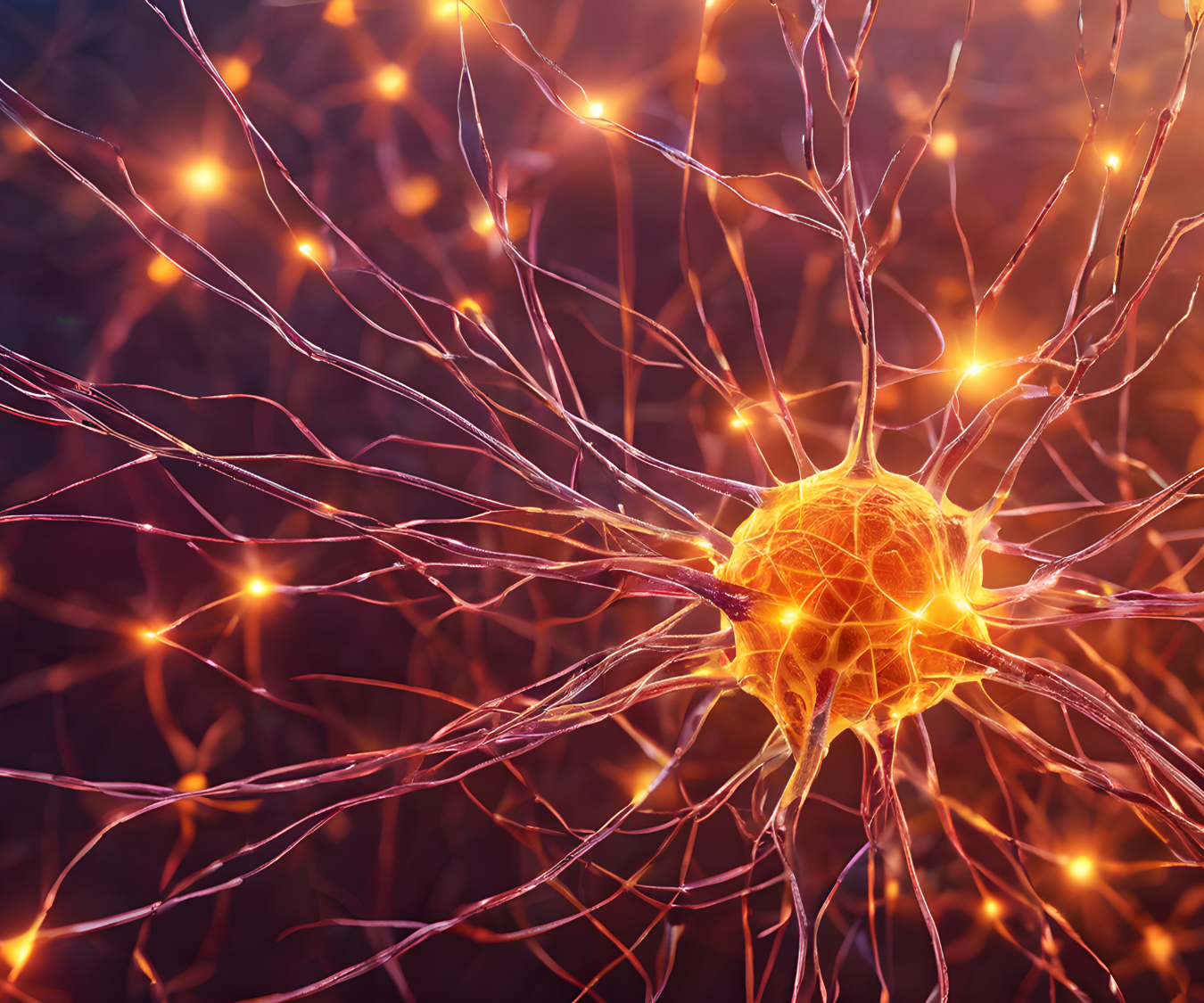
The nervous system is one of the most important systems in the human body. It controls communication between the brain, spinal cord, muscles, organs, and tissues. It allows the body to respond to internal and external changes while coordinating movement, thoughts, emotions, and essential functions.
The NERVOUS SYSTEM works through specialized cells that transmit electrical and chemical signals. These signals allow the body to process information quickly and respond appropriately.
Understanding the nervous system is important in areas such as exercise science, health, and human performance because it plays a major role in movement, coordination, and adaptation.
Nervous Tissue
Nervous tissue is specialized tissue responsible for communication and control throughout the body.
It is found in the brain, spinal cord, and peripheral nerves.
Nervous tissue contains two primary types of cells:
- Neurons
- Neuroglia
These cells work together to receive information, process signals, and maintain proper nervous system function.
Unlike many other tissues, nervous tissue is designed for rapid communication.
It allows the body to react quickly to changes in the environment.
Neuroglia
Neuroglia, also called glial cells, are support cells within nervous tissue.
Although neurons are responsible for transmitting signals, neuroglia provide the environment needed for neurons to function properly.
Neuroglia perform several important roles, including:
- Supporting neurons
- Protecting nervous tissue
- Maintaining chemical balance
- Providing nutrients
- Helping repair damaged tissue
- Forming protective coverings around nerve fibers
Neuroglia are essential for healthy nervous system function.
Without these supporting cells, neurons would not be able to communicate effectively.
Neurons
Neurons are specialized cells that transmit information through electrical and chemical signals.
They are considered the primary communication cells of the nervous system.
A neuron receives information, processes signals, and sends messages to other neurons, muscles, or glands.
Neurons allow the body to perform many important functions, including:
- Movement
- Sensory awareness
- Memory
- Learning
- Coordination
- Reflex responses
Communication between neurons occurs through connections called synapses.
At these connections, chemical messengers called neurotransmitters help transfer information from one cell to another.
Neurosecretory Tissues
Neurosecretory tissues are specialized nervous tissues that produce and release hormones.
These tissues connect the nervous system with the endocrine system.
They allow the brain to influence hormone production and regulate important body functions.
Examples of processes influenced by neurosecretory tissues include:
- Growth
- Metabolism
- Stress responses
- Reproduction
- Fluid balance
The relationship between the nervous system and endocrine system helps maintain balance within the body.
Structures of a Neuron
A neuron contains several structures that allow it to receive and transmit information.
The three main components of a neuron are:
- Cell body
- Axon
- Dendrite
Each structure has a specific role in neural communication.
Cell Body
The cell body, also called the soma, is the main control center of the neuron.
It contains the nucleus and other cellular structures needed for survival.
The cell body processes information received from other neurons.
It also maintains the functions necessary for the neuron to remain active.
Dendrites
Dendrites are branch-like structures that receive signals from other neurons.
They extend outward from the cell body and increase the surface area available for communication.
When a neuron receives information, dendrites carry these signals toward the cell body for processing.
The number and structure of dendrites help determine how effectively a neuron can communicate.
Axon
The axon is a long structure that carries signals away from the cell body.
It transmits electrical impulses to other neurons, muscles, or glands.
Some axons are covered with a protective substance called myelin.
Myelin helps signals travel faster and more efficiently.
The axon allows communication over long distances within the body.
The Central Nervous System
The central nervous system (CNS) is one of the two major divisions of the nervous system.
The nervous system is separated into two main divisions:
- Central nervous system
- Peripheral nervous system
The central nervous system includes:
- Brain
- Spinal cord
The CNS acts as the main processing center of the body.
It receives information, interprets signals, and creates responses.
The Peripheral Nervous System
The peripheral nervous system includes all nerves outside of the brain and spinal cord.
Its primary role is communication between the CNS and the rest of the body.
The peripheral nervous system carries sensory information toward the CNS and sends motor commands to muscles and organs.
This division allows the brain and spinal cord to communicate with every part of the body.
Nervous System and Movement
The nervous system plays a critical role in physical movement.
When a person decides to move, the brain sends signals through the spinal cord and peripheral nerves to activate muscles.
This communication allows muscles to contract and produce movement.
Exercise training can improve nervous system efficiency.
Strength improvements, especially during early stages of training, often occur because the nervous system becomes better at activating muscles.
Importance of the Nervous System in Health and Fitness
Understanding the nervous system helps explain how the body adapts to exercise.
Fitness professionals use this knowledge to improve:
- Movement quality
- Coordination
- Strength development
- Reaction time
- Injury prevention
The nervous system influences every movement pattern.
A healthy nervous system is essential for physical performance and daily function.
Conclusion
The NERVOUS SYSTEM is a complex communication network that controls and coordinates the body’s activities.
Nervous tissue contains neurons and neuroglia, which work together to transmit signals and support communication.
Neurons contain three main structures: the cell body, axon, and dendrite. These structures allow neurons to receive, process, and transmit information.
The nervous system is divided into the central nervous system and peripheral nervous system, allowing communication between the brain, spinal cord, and the rest of the body.
By understanding nervous system structure and function, we gain a better understanding of movement, health, and human performance.