
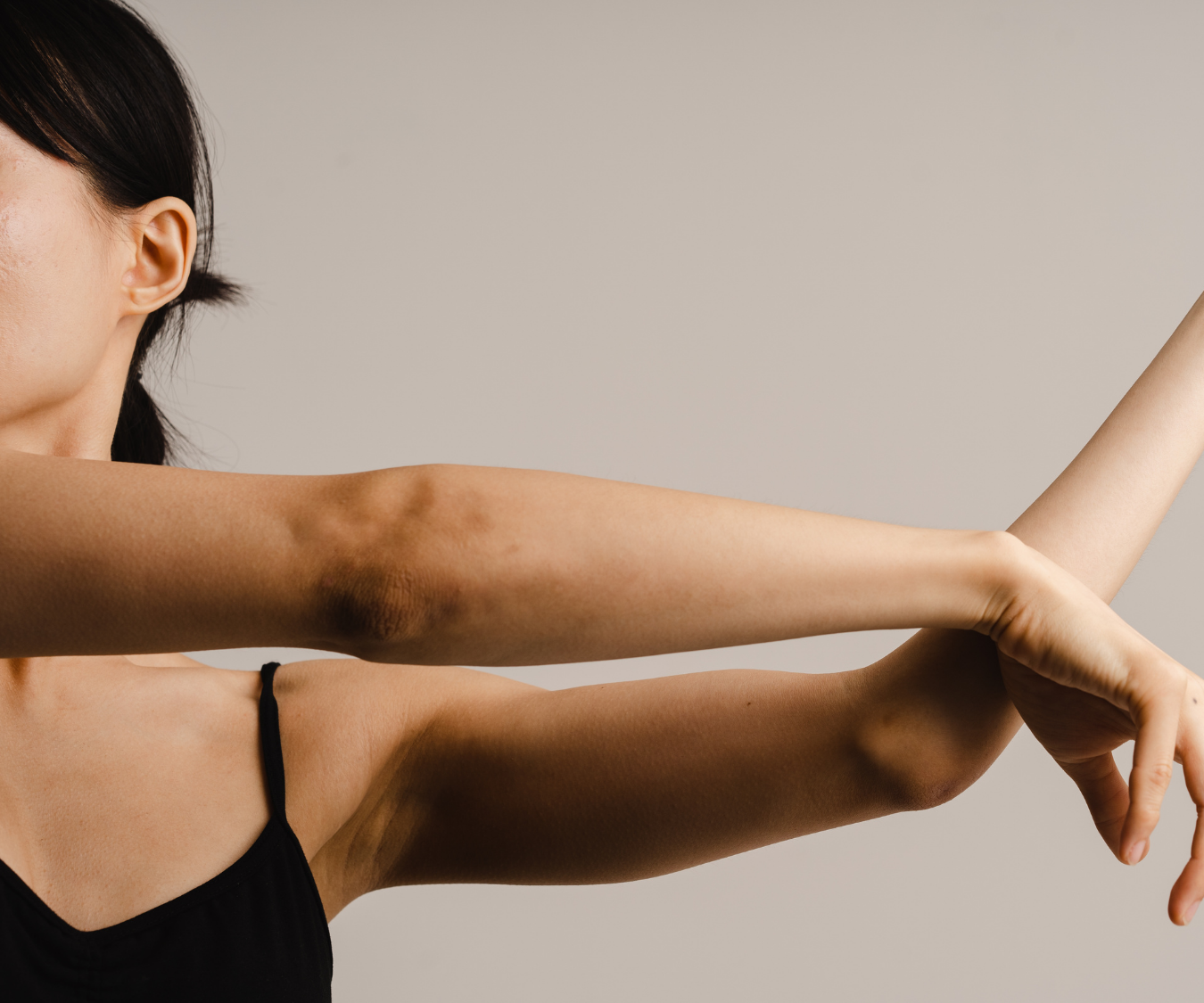
Biomechanics is the study of how forces interact with the body during movement. It combines principles of anatomy, physics, and physiology to explain how and why the human body moves.
Understanding biomechanics helps fitness professionals, coaches, and healthcare providers analyze movement patterns, improve performance, and reduce injury risk.
The body moves through specific anatomical planes and uses specific movement terms to describe the direction and action occurring at a joint.
Anatomical Position and Movement
Most movement descriptions begin from the anatomical position. This is when the body is standing upright, facing forward, with arms at the sides and palms facing forward.
Movement terms describe how body parts change position relative to this starting point.
Terms for Anatomical Movement
Abduction
Definition: Movement away from the midline of the body.
Example:
Raising the arms out to the sides during a lateral raise.
Adduction
Definition: Movement toward the midline of the body.
Example:
Lowering the arms back toward the body after a lateral raise.
Flexion
Definition: Movement that decreases the angle between two body parts.
Example:
Bending the elbow during a biceps curl.
Extension
Definition: Movement that increases the angle between two body parts.
Example:
Straightening the elbow after a biceps curl.
Lateral Flexion
Definition: Flexion occurring in the frontal plane.
Example:
Bending the torso sideways toward the right or left.
Scapular Movements
The scapula (shoulder blade) has unique movements that are important for upper-body function.
Protraction
Definition: Abduction of the scapula.
Example:
Moving the shoulder blades forward, such as during a push-up.
Retraction
Definition: Adduction of the scapula.
Example:
Pulling the shoulder blades together during a rowing movement.
Elevation
Definition: Movement in a superior direction.
Example:
Shrugging the shoulders upward.
Depression
Definition: Movement in an inferior direction.
Example:
Moving the shoulders downward after a shrug.
Foot and Ankle Movements
The ankle and foot have specialized movements that support balance, walking, and athletic performance.
Plantar Flexion
Definition: Extension of the foot downward (inferiorly).
Example:
Pointing the toes downward like pressing a gas pedal.
Dorsiflexion
Definition: Flexion of the foot upward (superiorly).
Example:
Lifting the toes toward the shin.
Inversion
Definition: Movement of the sole of the foot toward the median plane.
Example:
Rolling the bottom of the foot inward.
Eversion
Definition: Movement of the sole of the foot away from the median plane.
Example:
Rolling the bottom of the foot outward.
Rotational Movements
Rotation occurs when a body part turns around its axis.
External Rotation
Definition: Rotational movement away from the midline.
Example:
Turning the shoulder outward during a movement.
Internal Rotation
Definition: Rotational movement toward the midline.
Example:
Turning the shoulder inward.
Complex Joint Movements
Circumduction
Definition: Circular movement of a limb extending from the joint where the movement is controlled.
Example:
Making a circular motion with the arm at the shoulder joint.
Circumduction combines multiple movements, including:
- Flexion
- Extension
- Abduction
- Adduction
Forearm and Hand Movements
Pronation
Definition: Turning the palm or arch of the foot downward.
Example:
Rotating the forearm so the palm faces the floor.
Supination
Definition: Turning the palm or arch of the foot upward.
Example:
Rotating the forearm so the palm faces upward.
Movement Beyond Normal Range
Hyperextension
Definition: A position that extends beyond anatomical neutral.
Example:
Extending the neck or spine past its normal alignment.
Directional Movement Terms
Ipsilateral
Definition: Movement occurring on the same side of the body.
Example:
The right arm and right leg moving together.
Contralateral
Definition: Movement occurring on opposite sides of the body.
Example:
The right arm and left leg moving together during walking.
Lateral
Definition: Situated away from the midline.
Example:
The ears are lateral to the nose.
Medial
Definition: Situated toward or closer to the midline.
Example:
The nose is medial to the ears.
Why Understanding Biomechanics Matters
Biomechanics provides the foundation for understanding human movement. Knowing anatomical movement terms allows professionals to describe exercises accurately, identify movement limitations, and improve training programs.
For example:
- A squat involves hip and knee flexion during the lowering phase.
- A push-up involves elbow flexion and extension.
- A shoulder press involves shoulder abduction and elbow extension.
By understanding how forces interact with the body, movement professionals can create safer and more effective exercise programs. Biomechanics helps explain not only what the body does, but also why it moves the way it does.